Introduction
A patient feels unwell and needs to see a doctor. Instead of asking several people for a recommendation, they usually take out their phone and search online.
They may type “best cardiologist near me,” “orthopedic doctor in Jabalpur,” “dermatologist in Indore,” “gynecologist near me,” or “best dentist in my city.”
Within a few seconds, they can see doctor profiles, Google Business Profiles, reviews, websites, social media pages, services, locations, and contact information.
This change in patient behavior explains why doctors need digital marketing today.
A doctor may have excellent qualifications, years of experience, and a successful practice, but if patients cannot find that information online, they may choose another doctor who has a stronger digital presence.
Digital marketing helps doctors present their expertise online, reach people searching for healthcare services, build trust, and create more opportunities for patient inquiries.
Why Do Doctors Need a Strong Online Presence?
A doctor’s online presence is often the first impression a potential patient gets.
Before booking an appointment, patients may want to know:
- Who is the doctor?
- What is their specialization?
- What treatments do they provide?
- Where is the clinic?
- What are other patients saying?
- Is the doctor experienced?
- Can I easily contact the clinic?
- Is the information available online trustworthy?
A strong online presence answers these questions clearly.
Whether you are a cardiologist, orthopedic doctor, dermatologist, dentist, gynecologist, neurologist, pediatrician, ENT specialist, ophthalmologist, urologist, psychiatrist, physiotherapist, general physician, gastroenterologist, or another healthcare specialist, digital marketing can help you become more visible to the right audience.
How Doctors Can Attract More Patients Online
Digital marketing does not simply mean posting pictures on social media. It involves several activities that work together.
For example, a patient may discover a doctor through Google Search, check the doctor’s Google Business Profile, visit the website, read educational content, look at reviews, and finally call or WhatsApp the clinic.
This creates a complete patient journey:
Search → Discover → Research → Trust → Contact → Appointment
A well-planned digital strategy can support every stage of this journey.
1. Build a Professional Doctor Website
A website gives doctors a dedicated space to explain their professional expertise.
It should clearly include:
- Doctor’s name and specialization
- Qualifications
- Experience
- Treatments and services
- Clinic location
- Consultation information
- Contact details
- Professional photographs
- Patient-friendly educational content
For example, an orthopedic doctor can create pages about knee replacement, joint pain, sports injuries, and fracture treatment.
Similarly, a dermatologist can publish information about acne, skin allergies, pigmentation, and other relevant concerns.
A professional website can help patients understand the doctor’s services before they decide to contact the clinic.
2. Use SEO to Reach Patients Searching on Google
Search Engine Optimization, or SEO, helps a doctor’s website become more relevant to searches related to their specialty, services, and location.
Patients don’t always search for a doctor’s name. They often search for their problem or treatment.
For example:
- Best cardiologist in Indore
- Knee replacement doctor in Jabalpur
- Skin specialist near me
- Best dentist in Saket
- Gynecologist in Bhopal
By creating useful, well-structured service pages and informative content, doctors can target relevant searches.
This is another important reason why doctors need digital marketing: SEO gives doctors an opportunity to reach patients who are already looking for healthcare information or services.
3. Strengthen Google Business Profile and Local SEO
For doctors and clinics, local visibility is extremely important.
A patient searching for a nearby doctor may see Google Maps and local business results before visiting a website.
A properly optimized Google Business Profile should have accurate:
- Clinic name
- Address
- Phone number
- Website
- Working hours
- Services
- Clinic photographs
- Doctor information
- Genuine patient reviews
Local SEO helps connect doctors with people searching for healthcare services in their city or nearby areas.
Regular updates, accurate information, quality content, and genuine reviews can contribute to a stronger local presence.
4. Use Social Media to Build Trust
Social media allows doctors to communicate with patients beyond the clinic.
Platforms such as Instagram and Facebook can be used to share educational and professional content.
Doctors can create:
- Short educational videos
- Treatment explanations
- Healthcare tips
- Frequently asked questions
- Myth vs. fact posts
- Clinic updates
- Doctor introduction posts
- Patient education content
The purpose should not be to make every post promotional.
Instead, useful content can help patients become familiar with the doctor’s expertise and communication style.
Over time, consistent social media activity can support professional branding and visibility.
5. Create a Strong Doctor Profile and Personal Brand
Patients often compare several doctors before making an appointment.
A strong doctor profile helps communicate professional information in one place.
Your profile should consistently highlight:
Qualifications + Specialty + Experience + Services + Location + Professional Identity
The same information should be consistent across the website, Google Business Profile, social media, healthcare directories, and other relevant platforms.
This consistency makes the doctor’s online identity more professional and easier for patients to understand.
For doctors competing in the same city and specialty, strong personal branding can become an important differentiating factor.
6. Build Trust Through Genuine Reviews
Reviews are an important part of local healthcare visibility.
Patients often read reviews before contacting a doctor they do not already know.
Doctors should focus on delivering a positive patient experience and encourage satisfied patients to leave genuine and honest reviews.
Reviews should never be fabricated or manipulated.
A strong reputation develops from real patient experiences combined with professional service and consistent communication.
7. Use Content Marketing to Answer Patient Questions
Patients search online for answers before visiting a doctor.
A cardiologist might write about common heart-health questions. An orthopedic doctor can explain joint pain and treatment options. A dermatologist can publish educational content about skin conditions.
This type of content can help doctors:
- Educate patients
- Demonstrate expertise
- Target relevant search terms
- Increase website visibility
- Support SEO
- Build credibility
Good healthcare content should be informative, responsible, easy to understand, and not make unrealistic treatment promises.
8. Consider Paid Advertising for Faster Visibility
SEO is a long-term strategy. Paid advertising can provide additional visibility when doctors want to promote specific services or reach selected locations.
Google Ads and social media advertising can be used strategically for services such as consultations, diagnostic services, dental treatments, cosmetic procedures, or other appropriate healthcare offerings.
Advertising should be handled carefully, with accurate claims and clear landing pages.
Paid campaigns can complement—not replace—SEO, Local SEO, content, reputation management, and organic visibility.
Why Digital Marketing Gives Doctors More Opportunities
Traditional marketing still has value. Referrals, existing patients, local networking, and word-of-mouth can bring valuable business.
But digital marketing expands the number of ways a new patient can discover a doctor.
Someone who has never heard your name can search for a treatment, discover your profile, read about your expertise, check your location, and contact your clinic.
That is the real value behind why doctors need digital marketing.
It connects doctors with patients beyond their existing network.
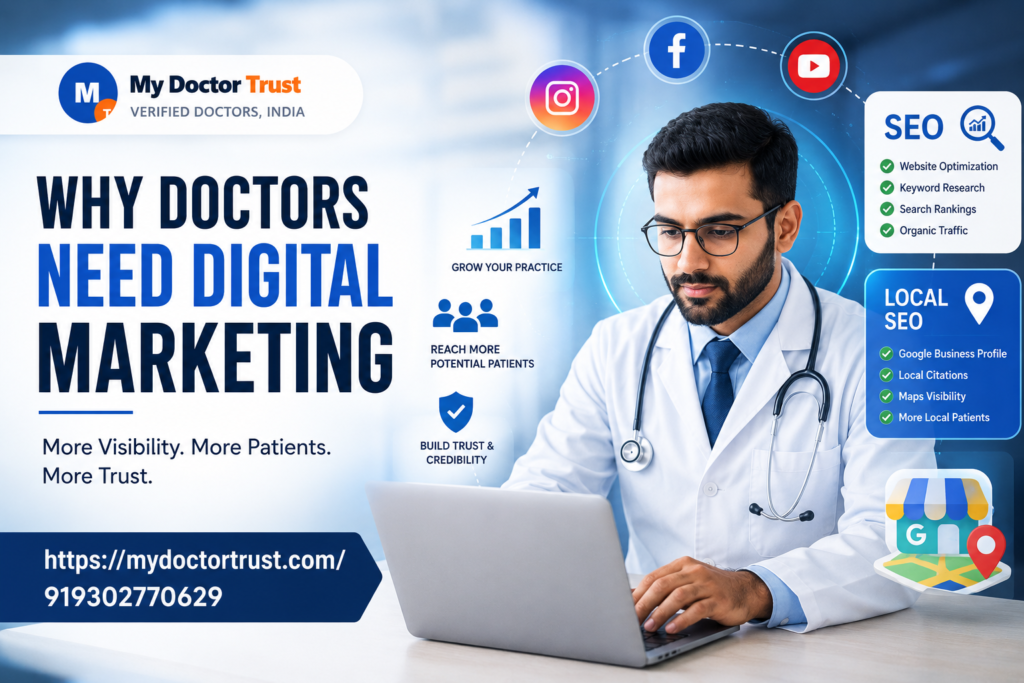
What a Complete Digital Marketing Strategy for Doctors Includes
A strong healthcare digital marketing strategy can include:
- Doctor Website Development
- SEO
- Local SEO
- Google Business Profile Optimization
- Social Media Marketing
- Content Marketing
- Doctor Personal Branding
- Online Reputation Management
- Business Listings
- Healthcare Backlinks
- Google Ads/PPC
- Video and Reels Marketing
- Profile Optimization
These activities work best when they are planned together instead of being handled as completely separate tasks.
FAQs
Why doctors need digital marketing when they already get referrals?
Referrals are valuable, but digital marketing helps doctors reach people outside their existing patient network who are actively searching online for healthcare services.
Can digital marketing help doctors get more patients?
It can create more opportunities for patient discovery and enquiries. Results depend on factors such as specialty, location, competition, online reputation, strategy, and implementation.
Is SEO important for doctors?
Yes. SEO can help a doctor’s website appear for relevant searches related to their specialty, treatments, and location.
Is a Google Business Profile important for doctors?
Yes. It helps patients find essential information about the doctor or clinic, including location, contact details, services, photographs, working hours, and reviews.
Should doctors use social media?
Social media can help doctors educate patients, demonstrate expertise, build familiarity, and strengthen their professional brand.
How long does digital marketing take to show results?
It depends on the strategy. SEO and organic visibility generally take time, while paid advertising can provide faster exposure. Consistency is important for long-term growth.
Conclusion
Healthcare is becoming increasingly digital, and patient behavior is changing with it. People now use Google, Maps, websites, social media, reviews, and online profiles to research doctors before making appointments.
That’s why why doctors need digital marketing is no longer simply a marketing question—it is about making professional expertise easier for the right patients to discover.
A strong website, SEO, Local SEO, Google Business Profile, social media, useful content, genuine reviews, and professional doctor branding can work together to create a trustworthy online presence.
Digital marketing cannot replace a doctor’s expertise or patient care. Instead, it helps make that expertise visible, accessible, and understandable online.
For doctors across different specialties, building a strong digital presence today can create a stronger foundation for reaching patients and growing their practice in the future.