
Child Health Checkup: Supporting a Healthy Start
Every parent wants to see their child grow up healthy, active, and confident. But children’s health is not only about treating a fever or visiting a doctor when a child feels unwell. Regular health monitoring can help parents and healthcare professionals understand whether a child is progressing appropriately and identify concerns that may need attention.
A Child Health Checkup provides an opportunity to assess different aspects of a child’s health and development. Depending on the child’s age and individual needs, a checkup may include growth measurements, developmental assessment, nutrition guidance, vaccination review, and other age-appropriate evaluations.
Imagine a young child who appears perfectly healthy at home. The child is active, playful, and eating normally. During a routine checkup, however, the healthcare professional notices that the child’s growth pattern needs closer monitoring. Instead of waiting for a problem to become obvious, the parents can discuss it early and understand what steps may be appropriate.
This is one reason regular health checkups can be valuable during childhood.
Why Is a Child Health Checkup Important?
Children go through significant physical, emotional, and developmental changes as they grow.
A routine Child Health Checkup can help parents keep track of these changes and discuss questions they may have about their child’s health.
Depending on age and individual circumstances, a checkup may help monitor:
- Height and weight
- Growth patterns
- Developmental milestones
- Nutrition
- Physical health
- Vaccination status
- Vision and hearing
- Sleep habits
- Behaviour and emotional well-being
The exact assessments can vary according to the child’s age and healthcare needs.
Step 1: Monitoring Growth and Development
Growth is one of the most visible indicators of a child’s development.
During a Child Health Checkup, a healthcare professional may measure height, weight, and other relevant growth indicators and compare them with appropriate growth references.
Parents should remember that children do not all grow at exactly the same rate. What matters is understanding the child’s overall growth pattern and discussing any concerns with a qualified healthcare professional.
Developmental milestones may also be discussed. Depending on age, these can include areas such as communication, movement, learning, social interaction, and everyday skills.
If a child appears to be experiencing developmental difficulties, discussing the concern early can help parents understand whether further assessment may be appropriate.
Step 2: Reviewing Nutrition and Eating Habits
Nutrition plays an important role in childhood growth.
Children need appropriate nutrients to support physical growth, brain development, activity, and overall health.
During a checkup, parents may discuss:
- Eating habits
- Meal routines
- Food variety
- Growth-related nutritional concerns
- Hydration
- Healthy snacks
- Age-appropriate nutrition
Instead of focusing only on how much a child eats, parents can also discuss the overall quality and variety of the child’s diet.
A healthcare professional can provide guidance based on the child’s age, growth pattern, dietary needs, and individual circumstances.
Step 3: Keeping Vaccinations on Track
Vaccination is another important part of preventive healthcare for children.
During a Child Health Checkup, parents can review the child’s vaccination records and discuss whether any scheduled vaccinations or follow-ups are due.
Vaccination schedules can vary depending on national recommendations, the child’s age, medical history, and other factors.
Parents should maintain an updated vaccination record and discuss any questions about vaccines with their child’s qualified healthcare professional.
Step 4: Checking Vision and Hearing
Children may not always realize or communicate that they are having difficulty seeing or hearing.
A child who struggles to see clearly may have difficulty reading, participating in classroom activities, or recognizing objects from a distance. Similarly, hearing difficulties can affect communication and learning.
Age-appropriate vision and hearing screening may therefore form part of routine pediatric healthcare when recommended.
If a concern is identified, the healthcare professional may recommend an appropriate specialist or further assessment.
Step 5: Discussing Sleep and Daily Habits
Sleep is an important part of childhood development.
During a Child Health Checkup, parents can discuss their child’s sleep routine, bedtime habits, and any concerns such as difficulty falling asleep or frequent night waking.
Other daily habits can also be discussed, including physical activity and screen time.
Creating healthy routines can support a child’s overall well-being and help establish positive habits as they grow.
Step 6: Understanding Behaviour and Development
Children develop not only physically but also socially and emotionally.
Parents may have questions about changes in behaviour, communication, learning, friendships, or emotional responses.
A routine checkup provides an opportunity to discuss these concerns rather than waiting until they become difficult to manage.
Parents should feel comfortable sharing observations with their child’s healthcare professional. Small details about behaviour or development can sometimes provide useful context.
What Parents Can Do Before a Child Health Checkup
A little preparation can make the appointment more useful.
Parents can bring:
- The child’s medical records
- Vaccination information
- A list of current medicines, if applicable
- Previous test reports, when relevant
- Questions about growth or development
- Notes about symptoms or behavioural changes
It can also be helpful to note changes in eating, sleeping, activity levels, or other habits that may be relevant.
The goal is not to create a long list of concerns, but to make sure important questions are not forgotten during the appointment.
When Should Parents Seek Medical Advice?

Routine checkups are useful, but parents should not necessarily wait for the next scheduled appointment if they notice a concerning change.
Depending on the situation, parents may seek professional advice if they notice significant changes in a child’s:
- Eating or drinking
- Growth
- Development
- Behaviour
- Sleep
- Hearing
- Vision
- Physical activity
For urgent or severe symptoms, appropriate medical attention should be sought promptly.
Online articles can provide general information but cannot replace an examination or personalized medical advice.
How Digital Marketing Helps Child Healthcare Professionals
Parents often use Google and other digital platforms when searching for pediatric healthcare information and professionals.
For healthcare professionals who provide child healthcare services, maintaining an informative digital presence can make it easier for parents to discover reliable information about services, clinic details, qualifications, and appointment options.
Digital Marketing Doctors can support healthcare professionals through website SEO, Google Business Profile optimization, local SEO, social media management, healthcare content, and online reputation management.
For example, a pediatric practice can publish educational content around child nutrition, vaccination awareness, developmental milestones, common childhood concerns, and preventive healthcare.
Informative content can help parents find useful resources while also improving the practice’s online visibility.
Real-World Experience With 200+ Doctors
Healthcare professionals often have limited time to manage websites, Google profiles, social media, reviews, and educational content while focusing on patient care.
Our team has worked with 200+ doctors, helping healthcare professionals strengthen different areas of their digital presence.
Our experience includes supporting doctors with website optimization, SEO, Google visibility, social media, healthcare content, and online reputation.
Every healthcare practice has different requirements. Some may need better local visibility, while others may need a stronger website, regular educational content, or improved social media management.
For child healthcare professionals, a patient-focused digital strategy can help parents find relevant information and understand the services offered.
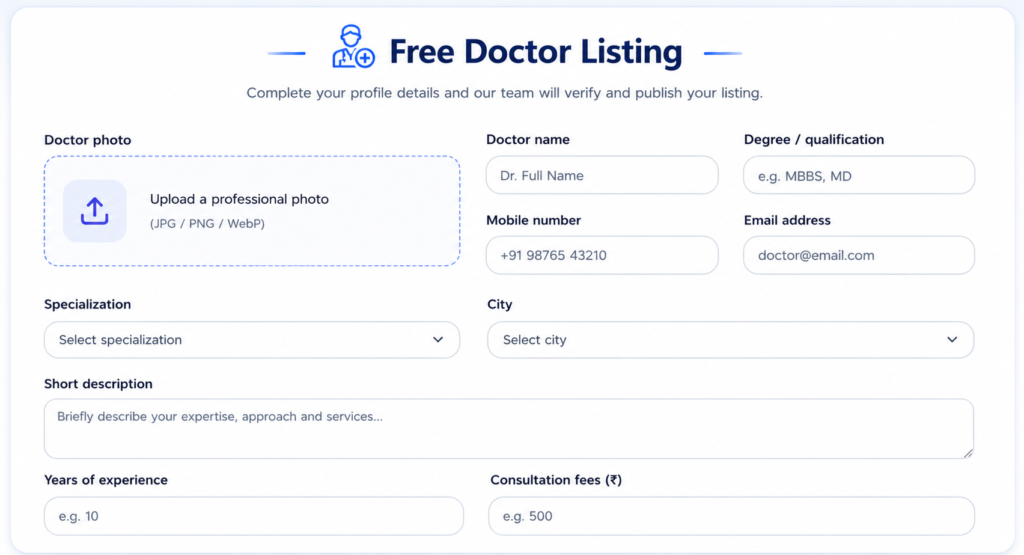
Free Doctor Listing for Better Online Visibility
An online healthcare listing can provide another way for parents and patients to discover healthcare professionals.
👉 Agar aap bhi apne clinic/hospital ki online presence badhana chahte hain, to abhi register karein Free Doctor Listing Platform par:
Free Doctor Listing Platform–
A professional listing can provide useful information about your practice, services, location, and contact details.
Building Healthy Habits Beyond the Checkup
A Child Health Checkup is only one part of supporting a child’s overall health.
Parents can also encourage healthy everyday habits such as balanced nutrition, regular physical activity, adequate sleep, good hygiene, age-appropriate screen habits, and regular communication about how the child is feeling.
Consistent preventive healthcare combined with healthy daily routines can provide a strong foundation for childhood development.
Conclusion
A Child Health Checkup gives parents an opportunity to understand their child’s growth, development, nutrition, vaccinations, and overall health. Regular healthcare visits can also provide a useful opportunity to discuss concerns before they become more difficult to address.
From monitoring growth and development to reviewing nutrition, vaccinations, vision, hearing, sleep, and daily habits, each part of a child’s health deserves appropriate attention.
With experience working with 200+ doctors, our team understands the importance of building a professional and informative digital presence for healthcare professionals. Through SEO, Google visibility, healthcare content, social media, online reputation, and doctor listings, healthcare practices can make useful information easier to discover online.
If you are a healthcare professional looking to strengthen your online presence, a patient-focused digital strategy can help you communicate your expertise and make your practice easier for families to find.