Eye Checkup by Optometrist: A Complete Guide to Your Eye Exam
Your eyes are essential for almost everything you do every day. From reading and working on a computer to driving, studying, and using a smartphone, clear vision plays an important role in daily life.
However, many people delay an eye examination until they notice a significant change in their eyesight. Vision can sometimes change gradually, making it difficult to recognize the difference until it starts affecting everyday activities.
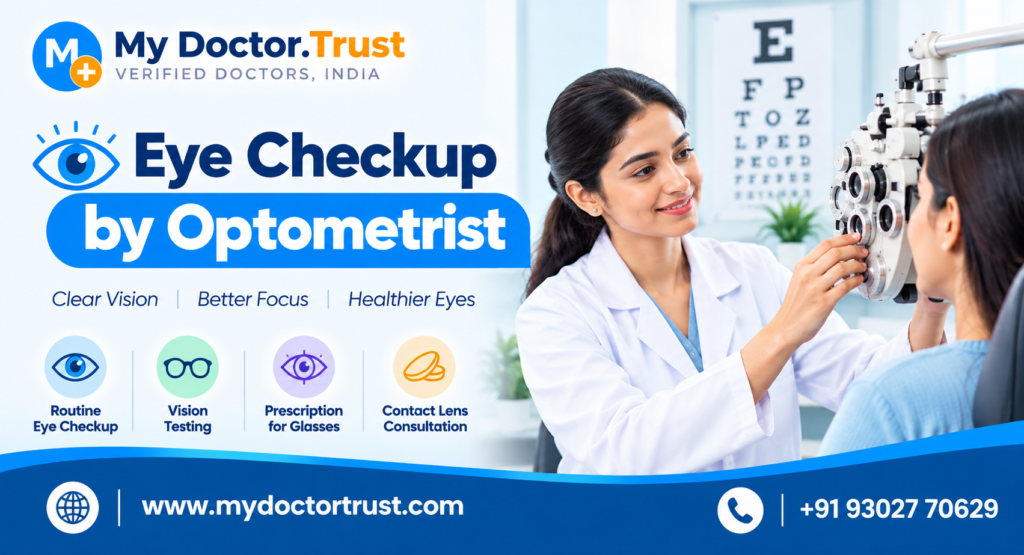
An Eye Checkup by Optometrist is an opportunity to have your vision assessed and discuss any concerns with a trained eye-care professional. Depending on your needs, an optometrist may assess visual acuity, check refractive errors, evaluate eye health, and provide appropriate vision-care guidance.
Understanding what happens during an eye examination can help you feel more comfortable and prepared for your appointment.
Why Is an Eye Checkup Important?
An eye checkup is not only about finding out whether you need glasses. A comprehensive examination can provide useful information about your vision and help identify changes that may require monitoring or further evaluation.
You may consider an eye examination if you experience:
- Blurred or unclear vision
- Difficulty reading small text
- Frequent headaches during visual tasks
- Eye strain or fatigue
- Difficulty seeing at night
- Frequent squinting
- Problems with your current glasses
- Changes in contact lens comfort
- Noticeable changes in vision
The appropriate frequency of eye examinations varies from person to person depending on age, symptoms, existing eye conditions, family history, and professional recommendations.
What Does an Optometrist Do?
An optometrist is an eye-care professional trained to examine vision and provide optometric services.
Depending on their qualifications and scope of practice, optometrists may provide:
- Vision examinations
- Refraction and prescription assessment
- Spectacle prescriptions
- Contact lens fitting and guidance
- Screening for certain eye conditions
- Monitoring changes in vision
- Advice about visual habits and eye care
- Referral to an ophthalmologist when specialized medical or surgical care is required
During an Eye Checkup by Optometrist, the tests performed can vary depending on your age, symptoms, vision history, and the equipment available at the practice.
What to Expect Before the Eye Exam
Your appointment may begin with a discussion about your vision and eye-care history.
The optometrist may ask about:
- Your current vision concerns
- Previous eye examinations
- Current glasses or contact lenses
- Any existing eye conditions
- Family history of eye problems
- Changes you have noticed in your eyesight
- Any relevant medications or health information
This is a good opportunity to explain any symptoms clearly. Even if a problem seems minor, mention it so the optometrist has a complete understanding of your concerns.
If you already wear glasses or contact lenses, taking them and your current prescription information to the appointment can also be helpful.
Vision Acuity Testing
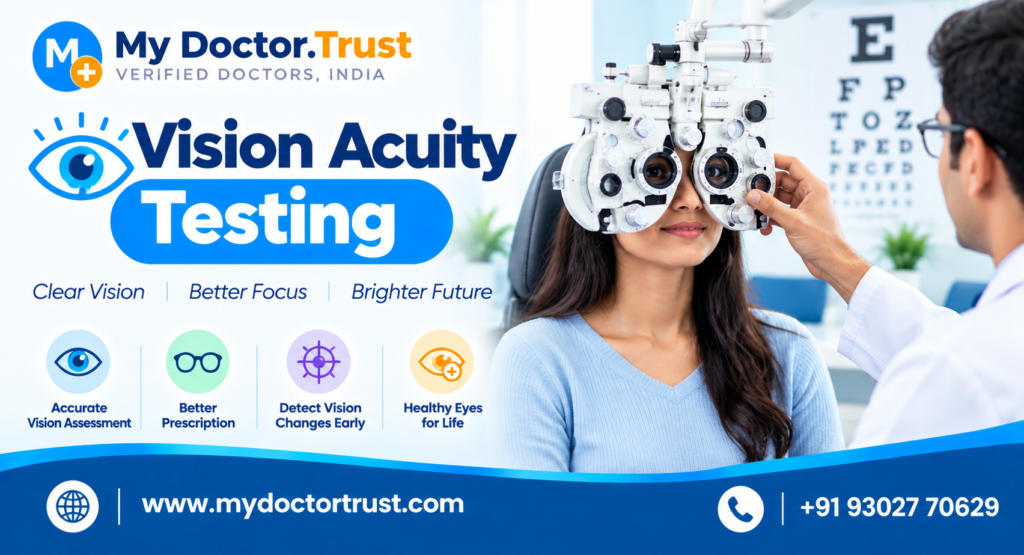
One of the most familiar parts of an eye examination is the vision chart.
You may be asked to read letters, numbers, or symbols from a specific distance. This helps assess how clearly you can see.
Near-vision testing may also be performed to assess your ability to focus on objects at a close distance.
These tests help the optometrist understand your current visual acuity and whether further assessment is needed.
Refraction and Prescription Assessment
If you have difficulty seeing clearly, the optometrist may perform a refraction test.
During this assessment, you may be shown different lens options and asked which view appears clearer. Your responses, combined with the examination findings, help determine an appropriate prescription.
Refraction can help identify common refractive errors such as:
- Myopia, or short-sightedness
- Hyperopia, or long-sightedness
- Astigmatism
- Presbyopia
If you already wear glasses, your current prescription may also be compared with your present visual needs.
Eye Health Assessment
An eye examination can include an assessment of different structures of the eye.
Depending on the examination and available equipment, an optometrist may look for signs that require monitoring or additional professional evaluation.
If an examination suggests that specialized medical or surgical assessment is needed, the optometrist may recommend consultation with an ophthalmologist or another appropriate healthcare professional.
It is important to remember that an online article cannot replace a professional eye examination.
Contact Lens Evaluation
If you wear contact lenses, or are considering using them, tell your optometrist during your appointment.
Contact lenses require appropriate fitting and responsible use. An optometrist can provide guidance related to lens selection, fit, wearing habits, cleaning, and general lens care.
If you experience persistent discomfort, redness, unusual sensitivity, or other concerning symptoms while wearing contact lenses, seek appropriate professional advice.
Discussing Your Eye-Test Results
After the examination, your optometrist can explain the findings and discuss any recommended next steps.
Depending on your results, you may receive:
- A new spectacle prescription
- Contact lens recommendations
- Advice about visual habits
- A recommended follow-up schedule
- Guidance about further evaluation when necessary
Do not hesitate to ask questions if you do not understand something.
You can ask your optometrist:
- Has my prescription changed?
- How often should I have my eyes checked?
- Are my current glasses still suitable?
- Would contact lenses be appropriate?
- Do I need any further evaluation?
Understanding your results can help you take a more active role in managing your vision care.
How Often Should You Have an Eye Checkup?
There is no single testing schedule that is suitable for everyone.
Children, adults, older people, contact lens users, and people with existing eye conditions may have different eye-care requirements.
Your optometrist can recommend an examination schedule based on your individual circumstances.
You should also consider seeking professional advice when you notice a significant change in your vision rather than waiting for your next routine appointment.
When Should You Seek Urgent Eye Care?
Some eye symptoms require prompt medical attention.
Sudden vision loss, sudden major changes in vision, severe eye pain, new flashes of light, or a sudden increase in floaters can require urgent evaluation.
If you experience sudden or severe visual symptoms, seek appropriate medical care promptly instead of relying on online information.
Digital Marketing for Optometrists
Patients increasingly use Google and other digital platforms to search for eye-care professionals, clinics, and healthcare information.
For optometrists, a professional online presence can help potential patients find information about services, clinic location, appointment details, and areas of expertise.
Digital Marketing Doctors can support healthcare professionals with services such as:
- Search engine optimization
- Google Business Profile optimization
- Local SEO
- Website optimization
- Healthcare content marketing
- Social media management
- Online reputation management
For example, an optometry practice can publish educational content about eye testing, children’s vision, contact lenses, screen-related eye strain, and common vision concerns.
Useful, patient-focused content can help people understand eye care while making relevant services easier to discover online.
Real-World Experience With 200+ Doctors
Building a healthcare brand online requires consistency, professional communication, and an understanding of patient needs.
Our team has worked with 200+ doctors, supporting healthcare professionals with different aspects of their digital presence, including websites, SEO, Google profiles, social media, healthcare content, and online reputation.
For example, a healthcare professional may have strong patient reviews but an outdated website, while another may have an informative website but limited Google visibility or inconsistent social media activity.
Our approach is to identify these gaps and build a digital strategy around the individual needs of the healthcare professional.
For an optometrist, this can include improving website visibility, creating educational eye-care content, optimizing local search presence, and maintaining a professional online profile.
Free Doctor Listing for Better Online Visibility
An online healthcare listing can provide another useful way for patients to discover healthcare professionals.
👉 Agar aap bhi apne clinic/hospital ki online presence badhana chahte hain, to abhi register karein Free Doctor Listing Platform par:
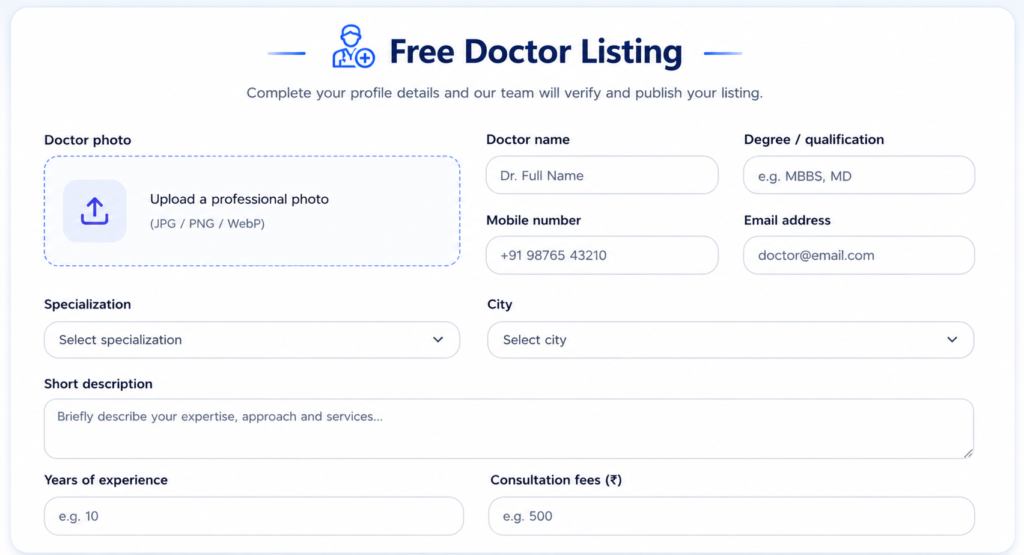
Free Doctor Listing –
A professional listing can provide patients with useful information about your practice, services, location, and contact details.
Conclusion
An Eye Checkup by Optometrist is an important opportunity to understand your current vision and discuss any concerns with a qualified eye-care professional. From visual acuity and prescription testing to eye health assessment and contact lens guidance, the examination can involve several steps based on your individual needs.
If you notice blurred vision, eye strain, difficulty reading, frequent headaches during visual tasks, or other changes in your eyesight, consider discussing them with an appropriate eye-care professional.
For optometrists and eye-care clinics, a strong digital presence can also make it easier for potential patients to discover relevant services. With experience working with 200+ doctors, our team understands how SEO, Google visibility, educational content, social media, online reputation, and healthcare listings can work together.
A professional, informative, and patient-focused digital strategy can help an optometry practice communicate its services clearly and build a stronger online presence over time.