Optometrist for Eye Testing: A Simple Guide to Your Eye Exam
Eye testing is an important part of maintaining good vision. Whether you have noticed blurred vision, difficulty reading, frequent eye strain, or simply want to monitor your eyesight, an eye examination can provide useful information about your visual health.
Many people are unsure about what happens during an eye exam. Knowing what to expect can make the process more comfortable and help you prepare the right questions for your eye-care professional.
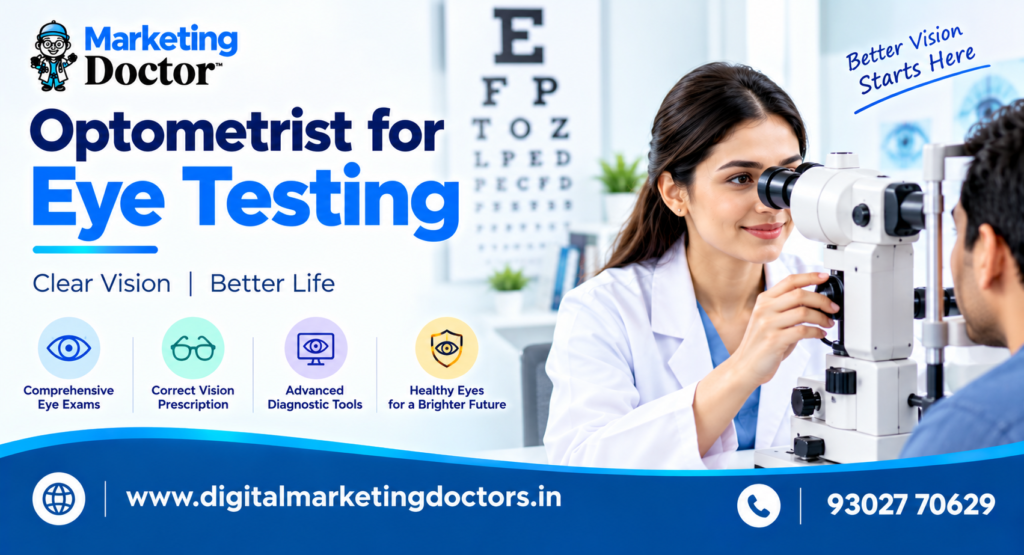
An Optometrist for Eye Testing can perform different types of vision assessments, check how clearly you see at various distances, evaluate refractive errors, and provide appropriate guidance based on the results. Depending on the findings, an optometrist may also recommend further evaluation by another eye-care professional when required.
Why Is Eye Testing Important?
Vision can change gradually, and you may not always notice these changes immediately. Some people adapt to gradually reduced vision without realizing that their eyesight has changed.
Regular eye examinations can help identify changes in vision and determine whether you need updated glasses or contact lenses.
Eye testing can be particularly useful if you:
- Have difficulty seeing distant objects
- Struggle to read small text
- Experience frequent eye strain
- Get headaches during visual tasks
- Notice changes in your vision
- Use glasses or contact lenses
- Spend many hours using digital screens
- Want to monitor your vision regularly
The appropriate frequency of eye examinations varies depending on factors such as age, symptoms, existing eye conditions, and professional advice.
What Does an Optometrist Do?
An optometrist is an eye-care professional trained to examine vision and provide optometric services.
Depending on their qualifications and scope of practice, an optometrist may provide:
- Vision examinations
- Refraction and prescription assessment
- Spectacle prescriptions
- Contact lens fitting and guidance
- Screening for certain eye conditions
- Monitoring of vision changes
- Advice about visual habits
- Referral for specialized medical or surgical eye care when appropriate
When you visit an Optometrist for Eye Testing, the examination is generally structured to understand your vision and identify whether any correction or additional evaluation may be appropriate.
Step 1: Discuss Your Eye-Care History
Your eye exam may begin with a conversation about your vision and general eye-care history.
The optometrist may ask about:
- Current vision concerns
- Previous eye examinations
- Glasses or contact lens use
- Existing eye conditions
- Family history of certain eye problems
- Medications or relevant health information
You can also explain any symptoms you have noticed, such as blurred vision, headaches, eye discomfort, difficulty seeing at night, or problems focusing.
Sharing accurate information can help the professional understand your individual needs.
Step 2: Check Your Distance and Near Vision
One of the familiar parts of an eye exam is the vision chart.
You may be asked to read letters, numbers, or symbols from a specific distance. The test can help assess how clearly you can see.
Near-vision testing may also be performed, particularly when assessing the ability to read or focus on objects at close range.
These assessments help the optometrist understand your current visual acuity.
Step 3: Refraction and Prescription Testing
If your vision requires correction, the optometrist may perform a refraction test.
You may be shown different lens options and asked which view appears clearer. The professional uses your responses and examination findings to determine an appropriate prescription.
This process can help identify common refractive errors such as:
- Myopia
- Hyperopia
- Astigmatism
- Presbyopia
If you already wear glasses, the optometrist may also compare your existing prescription with your current visual needs.
Step 4: Eye Health Assessment
An eye examination may include an assessment of different parts of the eyes.
Depending on the examination and available equipment, the optometrist may evaluate structures of the eye to identify signs that require monitoring or further professional evaluation.
If something requires specialized medical attention, the optometrist may recommend consultation with an ophthalmologist or another appropriate healthcare professional.
Step 5: Contact Lens Evaluation
If you wear contact lenses or are considering them, let your optometrist know.
Contact lens care involves more than simply selecting a prescription. Proper fit, wearing habits, hygiene, and lens care are important considerations.
An optometrist can provide guidance about suitable options and safe contact lens practices based on your individual requirements.
Step 6: Discuss Your Results
After the examination, your optometrist can explain the findings and discuss any recommended next steps.
You may receive a new spectacle prescription, contact lens guidance, recommendations for follow-up examinations, or advice about visual habits.
This is also a good time to ask questions.
For example, you can ask:
- Has my prescription changed?
- How often should I have my eyes tested?
- Are my current glasses suitable?
- Would contact lenses be appropriate for me?
- Do I need any further evaluation?
Understanding your results can help you make informed decisions about your eye care.
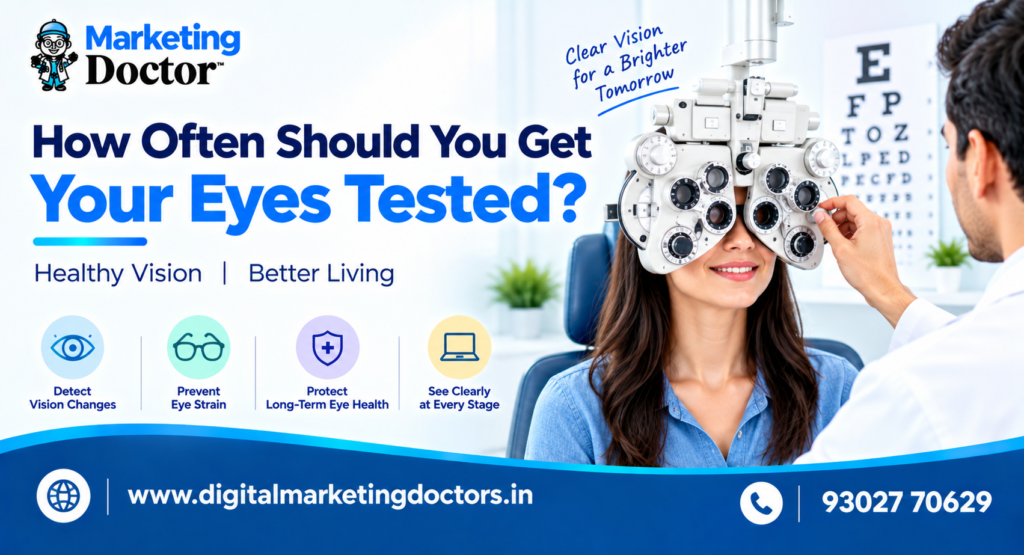
How Often Should You Get Your Eyes Tested?
There is no universal schedule that applies to every person.
The appropriate frequency can depend on your age, symptoms, existing eye conditions, family history, use of corrective lenses, and recommendations from your eye-care professional.
If you notice a significant change in your vision, you should not necessarily wait for your next routine appointment. Discuss your symptoms with an appropriate healthcare professional.
Choosing the Right Optometrist for Eye Testing
Finding a suitable eye-care professional involves more than simply choosing the nearest clinic.
When searching for an Optometrist for Eye Testing, consider:
- Professional qualifications
- Relevant experience
- Services offered
- Clinic location
- Appointment availability
- Patient reviews
- Professional online presence
- Availability of appropriate testing facilities
You can also check the clinic’s website or online profile before booking an appointment to understand the services available.
Digital Marketing for Optometrists
Today, patients increasingly use Google and online platforms to find healthcare professionals. This makes a strong digital presence useful for optometrists and eye-care clinics.
Digital Marketing Doctors can help healthcare professionals build and manage their online presence through services such as SEO, Google Business Profile optimization, social media management, website optimization, healthcare content, and online reputation management.
For example, an optometrist can publish educational content about eye testing, children’s vision, contact lenses, digital eye strain, and common vision problems.
Providing useful information online can help potential patients understand the services available and make it easier for them to find the practice.
Real-World Experience With 200+ Doctors
Healthcare professionals often have limited time to manage their websites, Google profiles, social media, reviews, and online content while focusing on patient care.
Our team has worked with 200+ doctors, helping healthcare professionals strengthen different areas of their digital presence.
Our work can include website optimization, SEO, Google visibility, social media management, healthcare content, online reputation, and patient-focused digital strategies.
For an optometrist, having these activities coordinated can create a consistent online presence and make relevant eye-care services easier for potential patients to discover.
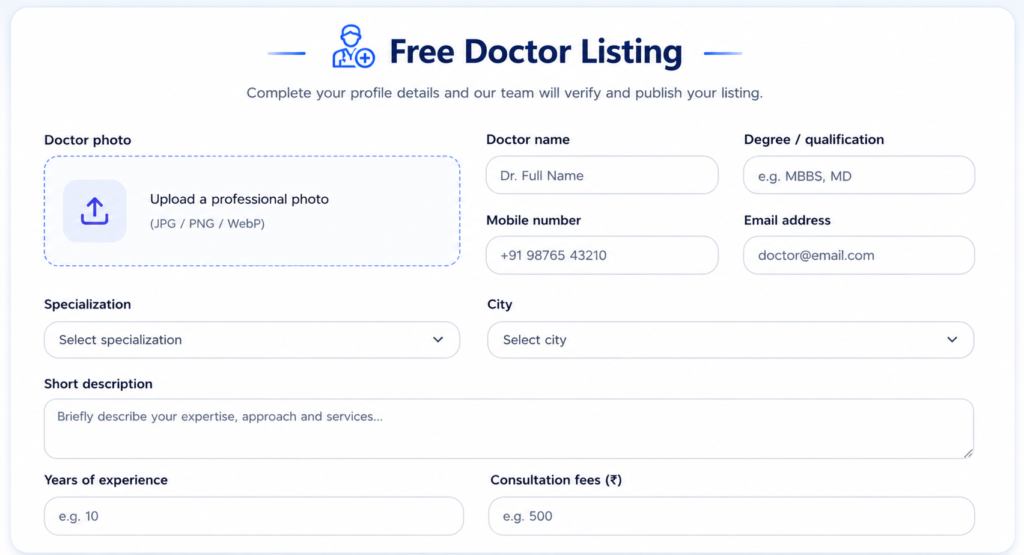
Free Doctor Listing for Better Online Visibility
An online healthcare listing can provide another way for patients to discover doctors and healthcare professionals.
👉 Agar aap bhi apne clinic/hospital ki online presence badhana chahte hain, to abhi register karein Free Doctor Listing Platform par:
Free Doctor Listing Platform –
A professional listing can provide patients with useful information about your practice, services, location, and contact details.
Conclusion
An eye examination is more than simply reading letters from a chart. An Optometrist for Eye Testing can assess your vision, check for refractive errors, evaluate visual needs, and provide appropriate guidance based on the examination.
Understanding the different stages of an eye exam can help you feel more prepared and encourage you to discuss any vision concerns openly with your eye-care professional.
For optometrists and eye-care clinics, building a strong online presence can also help patients discover relevant services. With experience working with 200+ doctors, our team understands how SEO, Google visibility, healthcare content, social media, online reputation, and doctor listings can work together.
Whether you are looking to improve your practice’s visibility or make your eye-care services easier to discover online, a professional and patient-focused digital strategy can support your long-term online presence.